Title details
Original Publication Date:2006
Edition Reviewed:Sentient Publications, 2006
Print Length:234 pages
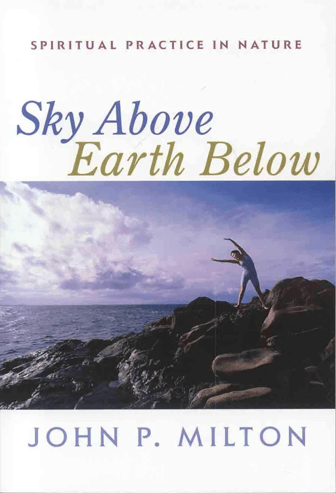
Sky Above, Earth Below
Spiritual Practice in Nature
By John P. Milton
Excerpt
Excerpt
“I have been fortunate to spend time with Taoist sages who are remarkable masters of harmony and balance. Nearly every one of them has spent long periods of time in wild Nature and surrendered to Great Nature, the unnameable Tao, as their primary teacher. One Taoist view that most impressed me was the way the sages described the fulfilment of the highest level of human potential and ability. They explained that becoming an integral one represents the greatest accomplishment a human can attain. An integral one is a human who has reached the full flowering of their potential and who lives in a completely integrated, essentialized state. All the elements, all the different aspects of the self are in complete harmony with the whole cosmos. The awareness rests in its free, unbounded, formless Source essence. All forms arise, display, and return to Source effortlessly, and yet, the Source remains unchanging.
Integration is characteristic of virtually everything in Nature. Integration is the way every form in Gaia functions when it rests in its primordial condition of interrelatedness. All beings in Nature carry this inner harmony. When you step forward into that world of the wild, into that world of the primal, you tap right back into your ancient essence and the inherent potential within you. It is then when your true essence begins to open and flower.”
Essence
Essence
Make Nature your primary teacher and temple and you can learn to embody the awareness, harmony, and integration that is humanity’s highest potential.
For over 50 years, John P. Milton – a pioneering ecologist, spiritual teacher, vision quest leader, and shaman – has guided countless human beings on their journeys into Nature, inner and outer. Informed by his own deep training in ‘Earth-connected’ spiritual traditions and a lifetime of learning in the wilderness, Milton developed a regenerative approach to living and evolving called Way of Nature. Grounded in his Twelve Guiding Principles of Natural Liberation, it is a path experientially rooted in communion with Nature through vision quests, sacred passages, and awareness training. Sky Above, Earth Below offers an introduction to Way of Nature principles, a glimpse into how Milton’s own life is an embodiment of its teachings, and a wealth of exercises for the reader to experience with Nature themselves. This practical manual, complete with illustrative photos and guidance through every practice, is designed to be as accessible as its message is urgent. A founding father of the environmental movement of the 1960s, Milton’s work and teachings are committed to ushering in healing and balance for our planet and all its inhabitants. Addressing the unique stresses of contemporary life, Sky Above, Earth Below offers both beginners and experienced practitioners an approach to natural awakening that requires no institutional framework, only willingness to enter into a direct transformational relationship with Nature and a commitment to one's own liberation in this lifetime.
Embodiment: Living the Wisdom
Embodiment: Living the Wisdom
Sky Above, Earth Below is structured to offer a distillation of John P. Milton's Twelve Guiding Principles of Natural Liberation into six cornerstones for spiritual cultivation:
- Relaxation
- Presence
- Cultivating Universal Energy
- Opening the Heart
- Cutting Through to Clarity and Spaciousness
- Returning to Source
The result is his seminal guide, with a dedicated chapter for teaching each principle, often by way of personal stories from Milton’s extraordinary life in deep relationship with Nature and Source Awareness. Guided exercises are offered throughout to help the reader experience “the embodiment of each principle,” and Milton suggests they are yours to make your own, be that shortening, lengthening, or adapting them however is fulfilling for your circumstances.
The wide-ranging exercises are drawn from numerous wisdom traditions, with an abundance of Qigong and Tai Chi practices that include meditative movement as well as stillness. Simple practices, such as lying down outdoors and softening joint by joint until the tension in your body finally lets go, are key to opening into relaxation and presence: “The cure for much worry and anxiety is the cultivation of presence.” The work is intentionally addressed to the modern reader who is dealing with the destabilisation of artificial environments, high-stress lifestyles, devitalised food, loud noise, and toxins. As Milton explains, he seeks “to assist contemporary cultures in walking the same path as the ancient wisdom cultures.” Noting that our human ancestors coevolved with Mother Earth over millions of years, he points out “inner and outer nature coevolved together as part of a seamless web of life. This is why many of us feel so at home praying, meditating, and doing ceremony in wild Nature. Such natural ways of spiritual cultivation go back at least fifty thousand years and almost certainly more, in contrast to modern historical lineages and religious institutions that reach back six thousand years or less.”
While the emphasis is always to get out into Nature, the wilder the better, Milton offers an example from his own life to demonstrate that “you do not have to be walking in Nature” to be transformed by it. In his earlier years, during his hour-long work commute, he learned to spend the time radiating appreciation for “the forests, the marshy streams, the natural lakes, the flowers, and the fields” until this commute, characterised by the gratitude practice, “became the high point of my day.”
This same chapter – devoted to the fourth principle: opening the heart of unconditional love – contains Milton's own adaptation of Tonglen, the Tibetan Buddhist practice of “taking and sending” designed to create and radiate compassion. Traditionally directed toward suffering beings, Milton widens it into an act of reciprocity with the Earth itself: “We have received so much from Mother Earth—the plants and animals, the very air we breathe… So this is a way we can give something back for all the gifts we have received from Nature.”
Milton’s closing thoughts on Nature and Great Spirit are that they have served as his “church and temple, phenomenal teachers, great friends, wonderful lovers, and faithful companions on the journey of life,” and Sky Above, Earth Below offers an invitation for you to meet them for yourself. For those who wish to go deeper into the path pioneered by Milton, there are programs, quests, and retreats hosted around the world by the Way of Nature community.
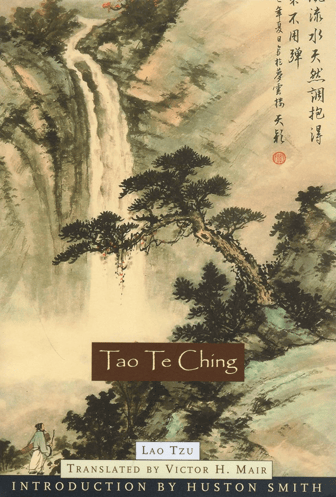
“Empty yourself of everything. Let the mind rest at peace.
Let the 10,000 things rise and fall, while the self watches their
return. They grow and flourish and then return to the Source.
Returning to the Source is stillness, which is the way of Nature.
The way of Nature is unchanging.”
– Tao Te Ching

“Trust the healing power of Nature and allow it to flow into you. It is best not to think about it. This is not a process of, Well, I am going to think myself into a healing state. It is a process of opening, relaxing, and allowing the healing power of Nature to enter you. The most important key is to actually trust that it will.”