Title details
Original Publication Date:1946
Edition Reviewed:Self-Realization Fellowship, 2021
Print Length:580 pages
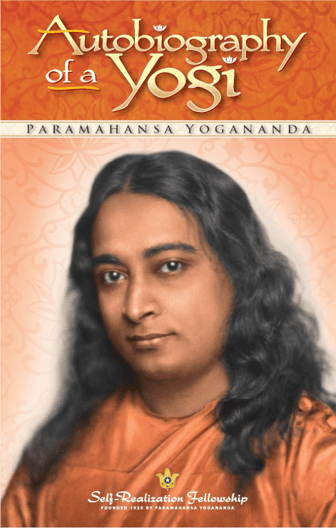
Autobiography of a Yogi
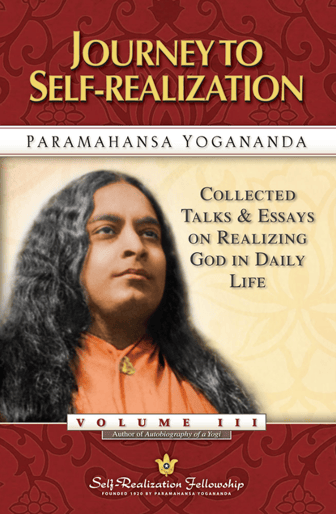
By Paramahansa Yogananda
Experience the Book
Excerpt
Excerpt
"According to the mass karma that guides and regulates the destinies of animals, the deer's life was over, and it was ready to progress to a higher form. But by my deep attachment, which I had later realized was selfish, and by my fervent prayers, I had been able to hold it in the limitations of the animal form from which the soul was struggling for release. The soul of the deer made its plea in a dream because, without my loving permission, it either would not or could not go. As soon as I agreed, it departed.
All sorrow left me; I realized anew that God wants His children to love everything as a part of Him, and not to feel delusively that death ends all. The ignorant man sees only the unsurmountable wall of death, hiding, seemingly forever, his cherished friends. But the man of unattachment, he who loves others as expressions of the Lord, understands that at death the dear ones have only returned for a breathing space of joy in Him."
Essence
Essence
India offers you an exact science of the soul: precise, empirical, and capable of accomplishing what might otherwise take a thousand years of evolution.
Autobiography of a Yogi is widely considered a modern spiritual classic. To read it is to travel in extraordinary company – not just Paramahansa Yogananda's, but that of the many Indian saints, gurus, and disciples whose wisdom and wit he shares so generously. Yogananda writes as he lived: with inspiring devotion, powerful authenticity, and charming delight. The miraculous and the mundane are not in tension here – they are the same continuous fabric, and that's what makes the book so disarmingly transformative. His incomparable life story – from growing up in Bengal to introducing millions in America to India's ancient science of consciousness – sets the stage for exploration of so many topics, from health and science to East–West relations, astrology, and karma. Central to all of it is Kriya Yoga – not to be confused with the physical yoga practices of today that are too often detached from their spiritual purpose. Kriya is a precise, empirical method of working directly with the life force. Where most spiritual paths must coax the mind gradually away from its entanglement with the world, Kriya works at the level of the life current itself – which is why Yogananda describes it, with characteristic wit, as “the ‘airplane’ route” to God, versus the “slow, uncertain bullock cart” of conventional theological practice.
Embodiment: Living the Wisdom
Embodiment: Living the Wisdom
Autobiography of a Yogi is a work that expands what you thought was possible – not through argument, but through encounter. Yogananda and his guru, Sri Yukteswar – one of India's most revered spiritual teachers of the modern era – approach every subject in the same way: not as matters of faith to be accepted or believed, but as realities to be investigated. On astrology, a subject Yogananda initially greets with some scepticism, Sri Yukteswar embodies a more expansive view: "It is never a question of belief; the only scientific attitude one can take on any subject is whether it is true. The law of gravitation worked as efficiently before Newton as after him. The cosmos would be fairly chaotic if its laws could not operate without the sanction of human belief." Astrology, he explains, is simply “the study of man's response to planetary stimuli” – rooted in the same principle that “all parts of creation are linked together and interchange their influences.” The same unflinching empiricism applies throughout: to karma, death, cosmic consciousness, and the nature of the soul. Sri Yukteswar's counsel that "sacred writings are beneficial in stimulating desire for inward realisation, if one stanza at a time is slowly assimilated" is good advice for the book itself: this is not a text to race through, but to allow into your life and consider its wisdom in the context of your own experience.
Yogananda writes: "Identifying himself with a shallow ego, man takes for granted that it is he who thinks, wills, feels, digests meals, and keeps himself alive, never admitting through reflection – only a little would suffice – that in his ordinary life he is naught but a puppet of past actions and of Nature or environment. Each man's intellectual reactions, feelings, moods, and habits are merely effects of past causes, whether of this or a prior life. Lofty above such influences, however, is his regal soul." This is what he calls the Emperor Soul – the true self that is neither body nor personality nor accumulated karma, but something regal and indestructible. Here, your soul is not a theological abstraction, but a living fact that can be known directly.
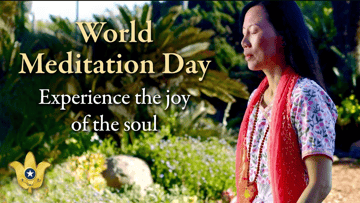
The specific method Yogananda offers for that knowing is Kriya Yoga – an ancient Indian practice that works directly with the life force. Where ordinary introspection or meditation attempts to force apart the mind and senses, "Kriya, controlling the mind directly through the life force, is the easiest, most effective, and most scientific avenue of approach to the Infinite." The transformation it produces is gradual and embodied: "The body of the average man is like a fifty-watt lamp, which cannot accommodate the billion watts of power roused by an excessive practice of Kriya. Through gradual and regular increase of the simple and foolproof methods of Kriya, man's body becomes astrally transformed day by day, and is finally fitted to express the infinite potentials of cosmic energy, which constitutes the first materially active expression of Spirit.” Embodiment in this context is when we are no longer living from the accumulated weight of karma but "solely by directions from the soul" – and it is described not as mystical abstraction but as a practical, achievable state. Those wishing to pursue Kriya Yoga directly can explore the work of the Self-Realization Fellowship, the organisation Yogananda founded, which offers a structured programme of study and practice – including the nine-month SRF Lessons course leading to Kriya initiation – as well as daily virtual group meditations at the SRF Online Meditation Center.
A core message in Autobiography of a Yogi is that the great spiritual teachers of East and West were not founders of competing religions but voices of a single reality. It was Sri Yukteswar himself who charged the young Yogananda with the task: "Will you not write a short book on the underlying harmony between Christian and Hindu scriptures? Their basic unity is now obscured by men's sectarian differences. Show by parallel references that the inspired sons of God have spoken the same truths." Christ and Krishna, Paul and Patanjali, and other Christian mystics and Vedic seers were all pointing at the same inner reality – what separates all the great traditions is largely just human interpretation, institution, and rivalry. This is, ultimately, a work and message for readers from any background – Christian, Hindu, secular, or simply searching.
Whether or not Kriya Yoga becomes your practice, Autobiography of a Yogi offers an inspiring account of the life and wisdom of one of the most beloved spiritual teachers of modern times – a beacon for the possibility of true integration between East and West, science and spirituality, body, mind, and Emperor Soul.
"East and West must establish a golden middle path of activity and spirituality combined…India has much to learn from the West in material development; in return, India can teach the universal methods by which the West will be able to base its religious beliefs on the unshakeable foundations of yogic science."
This edition of Autobiography of a Yogi is shared with kind permission and support from Self-Realization Fellowship.

“It is only when a traveler has reached his goal that he is justified in discarding his maps. During the journey, he takes advantage of any convenient shortcut. The ancient rishis discovered many ways to curtail the period of man’s exile in delusion. There are certain mechanical features in the law of karma that can be skillfully adjusted by the fingers of wisdom.”