Title details
Original Publication Date:1889
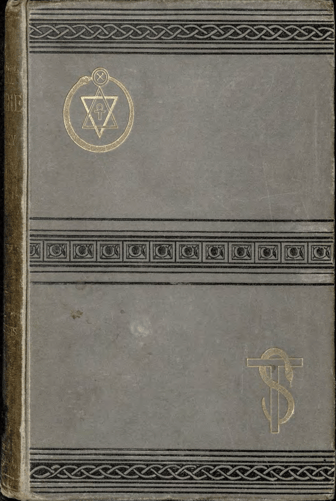
Edition Reviewed:Theosophical Publishing Company, 1889
Print Length:97 pages
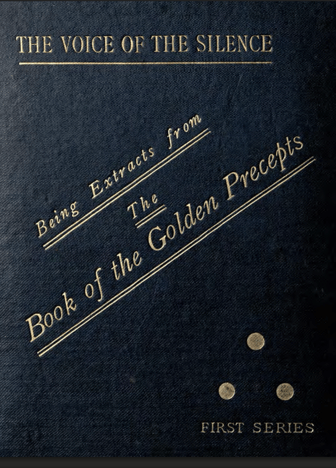
The Voice of the Silence
By Helena Petrovna Blavatsky
Experience the Book
Excerpt
Excerpt
“O Teacher, what shall I do to reach to Wisdom?
O Wise one, what, to gain perfection?
Search for the Paths. But, O Lanoo, be of clean heart before thou startest on thy journey. Before thou takest thy first step learn to discern the real from the false, the ever-fleeting from the everlasting. Learn above all to separate Head-learning from Soul-Wisdom, the 'Eye' from the 'Heart' doctrine. [...]
Even ignorance is better than Head-learning with no Soul-wisdom to illuminate and guide it.
The seeds of Wisdom cannot sprout and grow in airless space. To live and reap experience the mind needs breadth and depth and points to draw it towards the Diamond Soul. Seek not those points in Mâyâ's realm; but soar beyond illusions, search the eternal and the changeless SAT, mistrusting fancy's false suggestions.
For mind is like a mirror; it gathers dust while it reflects. It needs the gentle breezes of Soul-Wisdom to brush away the dust of our illusions. Seek O Beginner, to blend thy Mind and Soul.”
Essence
Essence
The voice that speaks in absolute stillness reveals the path to liberation, then asks: “Will you cross to the other shore alone, or remain to help all beings reach it?”
The Voice of the Silence comprises three fragments from The Book of the Golden Precepts, a spiritual text used in Eastern mystical traditions, translated from memory by Helena Petrovna Blavatsky. Written in 1889, this poetic work guides spiritual aspirants through the portals of sincere discipleship, culminating in the choice between becoming a Pratyeka Buddha who enters Nirvana alone, or a Bodhisattva who renounces personal rest to remain in compassionate service to suffering humanity. The work draws on the esoteric “Heart Doctrine” – what must be lived to be known – rather than the exoteric “Eye Doctrine” of public teachings. Considered a keystone text in the theosophical canon, and recognised for its impact by the 14th Dalai Lama (who wrote the forward in the centennial edition), LightEn is highlighting The Voice of the Silence as part of its stewardship of the Theosophical Society Library of England & Wales.
Embodiment: Living the Wisdom
Embodiment: Living the Wisdom
The Voice of the Silence illuminates a fundamental distinction of the spiritual path: “Learn above all to separate Head-learning from Soul-Wisdom, the ‘Eye’ from the ‘Heart’ doctrine.” Head-learning is intellectual accumulation – concepts, theories, explanations about spiritual truth – whereas Soul-Wisdom emerges through direct inner experience.
The practice of living this wisdom begins with stilling the mind, which “like a mirror…gathers dust while it reflects”; through Dhâraṇâ – intense concentration with complete abstraction from the external world – you begin clearing this dust. “The Mind is the great Slayer of the Real. Let the Disciple slay the Slayer.”
As mental noise subsides, subtler perceptions awaken. Blavatsky describes seven inner sounds denoting stages of consciousness development: “The first is like the nightingale's sweet voice chanting a song of parting to its mate. The second comes as the sound of a silver cymbal of the Dhyânis, awakening the twinkling stars. The next is as the plaint melodious of the ocean-sprite imprisoned in its shell. And this is followed by the chant of Vînâ. The fifth like sound of bamboo-flute shrills in thine ear. It changes next into a trumpet-blast. The last vibrates like the dull rumbling of a thunder-cloud. The seventh swallows all the other sounds. They die, and then are heard no more.”
These descriptions aren't metaphors but actual experiences arising in your body through sustained practice. Honest examination is required along the way: “Kill out desire; but if thou killest it take heed lest from the dead it should again arise.” Even the desire for liberation must be transcended: “Kill love of life, but if thou slayest tânhâ, let this not be for thirst of life eternal, but to replace the fleeting by the everlasting.”
As you progress, there are Seven Portals – charity, harmony, patience, indifference, energy, contemplation, and wisdom – enabling individual consciousness to recognise itself as a ray of universal awareness. “Seek in the Impersonal for the ‘eternal man’; and having sought him out, look inward: thou art Buddha.” Embodiment arises as the path becomes inseparable from the walker: “Thou canst not travel on the Path before thou hast become that Path itself.”
Blavatsky writes that for the sincere disciple, there will – in time – come a defining choice of direction. The "Open Path" leads to Nirvana – complete liberation beyond the world forever. In contrast, the "Secret Path" requires renouncing your personal Nirvana to remain engaged with a suffering humanity. “To live to benefit mankind is the first step... To don Nirmânakâya's humble robe is to forego eternal bliss for Self, to help on man's salvation.”
This choice to walk the Secret Path is lived daily: “Let thy Soul lend its ear to every cry of pain like as the lotus bares its heart to drink the morning sun. Let not the fierce Sun dry one tear of pain before thyself hast wiped it from the sufferer's eye.” The Secret Path means accepting that “there is no bliss when all that lives must suffer” and thereby choosing to remain – invisibly – as part of the “Guardian Wall” that shields humanity from greater suffering.
Ultimately, The Voice of the Silence reveals that spiritual mastery isn't about one's personal nirvana – it’s a journey of lifetimes that culminates in the capacity and choice to serve the world with perfect compassion.
“Compassion is no attribute. It is the LAW of LAWS – eternal Harmony, Alaya's SELF; a shoreless universal essence, the light of everlasting Right, and fitness of all things, the law of love eternal.”

“Before thou takest thy first step learn to discern the real from the false, the ever-fleeting from the everlasting. Learn above all to separate Head-learning from Soul-Wisdom, the 'Eye' from the 'Heart' doctrine.”