Title details
Original Publication Date:1963
Edition Reviewed:Fortress Press Gift Edition, 2010
Print Length:168 pages
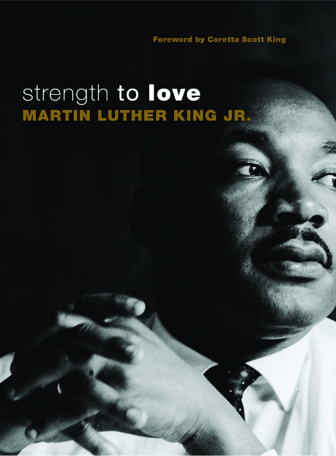
Strength to Love
By Dr. Martin Luther King Jr.
Excerpt
Excerpt
“We must recognize that the evil deed of the enemy-neighbor, the thing that hurts, never quite expresses all that he is. An element of goodness may be found even in our worst enemy. Each of us is something of a schizophrenic personality, tragically divided against ourselves. A persistent civil war rages within all of our lives. Something within us causes us to lament with Ovid, the Latin poet, “I see and approve the better things, but follow worse,” or to agree with Plato that human personality is like a charioteer having two headstrong horses, each wanting to go in a different direction, or to repeat with the Apostle Paul, “The good that I would I do not: but the evil which I would not, that I do.” This simply means that there is some good in the worst of us and some evil in the best of us. When we discover this, we are less prone to hate our enemies. When we look beneath the surface, beneath the impulsive evil deed, we see within our enemy-neighbor a measure of goodness and know that the viciousness and evilness of his acts are not quite representative of all that he is. We see him in a new light.”
Essence
Essence
The good life demands both a tough mind and a tender heart.
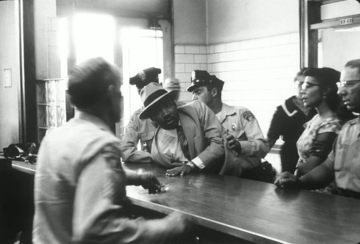
Strength to Love is a collection of sermons by Dr. Martin Luther King Jr., three of them written from a jail cell where he had been imprisoned for peacefully protesting racial segregation. From 1955–1968, King led the US civil rights movement at enormous personal cost – he was threatened, bombed, and ultimately assassinated for his convictions. When he writes about meeting hatred with love, he is not speaking from theory. Every person’s life contains its own encounters with injustice, cruelty, and the temptation to harden. Let King’s sermons summon you to a different kind of strength: one that resists without letting resistance calcify your own heart, one that meets hate with love and thereby breaks the cycle of violence. To remake the world, you must remake your own response to suffering. Take up the call to love your enemies and you will realise your true strength. Ultimately, King’s message – and life – is as practical as it is inspiring: the embodiment of love in action.
Embodiment: Living the Wisdom
Embodiment: Living the Wisdom
For Martin Luther King Jr., the spiritual call is one of action. He asks us not merely to lament the state of things but to act, for too many of us are “thermometers that record or register the temperature of majority opinion, not thermostats that transform and regulate the temperature of society.” Instead of throwing our hands up in despair, we must trust that our present sufferings can be woven into something greater: “There were two ways in which I could respond to my situation—either to react with bitterness or seek to transform the suffering into a creative force.” And even if we may not live to see our dreams realised completely, we should stay the course, having an “acceptance of finite disappointment even as we adhere to infinite hope.”
King’s call is to a spirituality that is not only intimately personal but fiercely social in its compassion, recognising that “all life is interrelated. All men are caught in an inescapable network of mutuality, tied in a single garment of destiny. Whatever affects one directly affects all indirectly. I can never be what I ought to be until you are what you ought to be, and you can never be what you ought to be until I am what I ought to be. This is the interrelated structure of reality.”
In the tradition of both Gandhi and Jesus, King famously preaches non-violent resistance to unjust authority. Only loving our enemies can truly break the cycle of violence, and this calls us to see the divine spark in our oppressors, overcoming the hate that comes from fear: “Returning hate for hate multiplies hate, adding deeper darkness to a night already devoid of stars. Darkness cannot drive out darkness; only light can do that. Hate cannot drive out hate; only love can do that. Hate multiplies hate, violence multiplies violence.” In both our personal and social lives, we are to be “transformed non-conformists” who push back against injustice without allowing ourselves to be conformed to its likeness, refusing to adopt the same anger and impatience as the oppressor: “To our most bitter opponents we say: ‘We shall match your capacity to inflict suffering by our capacity to endure suffering. We shall meet your physical force with soul force. Do to us what you will, and we shall continue to love you. We cannot in all good conscience obey your unjust laws, because noncooperation with evil is as much a moral obligation as is cooperation with good. Throw us in jail, and we shall still love you. Send your hooded perpetrators of violence into our community at the midnight hour and beat us and leave us half dead, and we shall still love you. But be ye assured that we will wear you down by our capacity to suffer. One day we shall win freedom, but not only for ourselves. We shall so appeal to your heart and conscience that we shall win you in the process, and our victory will be a double victory.’”
This same conviction — that love, not force, is the deeper strength — runs through King's reading of modernity itself, not only his response to racial injustice. He turns it on science, technology, capitalism, and the inner life. In the opening sermon, he addresses the relationship between science and religion with a clarity that cuts through centuries of assumed conflict: “There may be a conflict between softminded religionists and toughminded scientists, but not between science and religion. Their respective worlds are different and their methods are dissimilar. Science investigates; religion interprets. Science gives man knowledge which is power; religion gives man wisdom which is control. Science deals mainly with facts; religion deals mainly with values. The two are not rivals. They are complementary.” Later in the work, he sharpens his observation on the state of imbalance between science and spirituality: “The means by which we live have outdistanced the ends for which we live. Our scientific power has outrun our spiritual power. We have guided missiles and misguided man.”
While King’s sermons were forged in the context of the US civil rights movement, the wisdom he imparts is universal. Strength to Love is a work for anyone who is curious to learn more about living from “a tough mind and a tender heart” – what King describes as the necessary combination for “the good life” and the path to freedom, in any circumstance. A celebrated and stirring orator, you can also listen to King delivering a number of the sermons in Strength to Love by following the links below.
“Our hope for creative living lies in our ability to reestablish the spiritual ends of our lives in personal character and social justice. Without this spiritual and moral reawakening we shall destroy ourselves in the misuse of our own instruments. Our generation cannot escape the question of our Lord: What shall it profit a man, if he can gain the whole world of externals—aeroplanes, electric lights, automobiles, and color televisions—and lose the internal—his own soul?”

“One of the great tragedies of life is that men seldom bridge the gulf between practice and profession, between doing and saying. A persistent schizophrenia leaves so many of us tragically divided against ourselves. On the one hand, we proudly profess certain sublime and noble principles, but on the other hand, we sadly practice the very antithesis of those principles. How often are our lives characterized by a high blood pressure of creeds and an anemia of deeds!”